

MUSCAT: A new geological study by Sultan Qaboos University (SQU) has shed light on the origin and formation of manganese deposits in Oman's Wahrah Formation, identifying promising prospects for further mineral exploration and research.
Manganese is a strategic mineral widely used in steelmaking, battery technology and clean energy applications. Its growing importance in global industries has increased interest in identifying new deposits and assessing their commercial potential.
The research, conducted by SQU PhD student Abdulrahman Sheikho under the supervision of Dr Salah al Khirbash of the Department of Earth Sciences at the College of Science, examined manganese deposits associated with the Wahrah Formation, which extends across parts of Al Sharqiyah North, Al Sharqiyah South and Al Dakhiliyah governorates.
The study investigated the geological characteristics of these deposits, their depositional environments and the natural processes responsible for their formation.
Manganese deposits occur in diverse geological environments, including sedimentary, marine and volcanic settings, as well as formations associated with ophiolites, which are ancient sections of oceanic crust. Their formation involves processes such as mineral precipitation from seawater, hydrothermal activity and the weathering and subsequent concentration of manganese-rich rocks.
Manganese occurs in several mineral forms, including oxides, carbonates and silicates. Oxides and carbonates, particularly pyrolusite and rhodochrosite, are generally more commercially attractive because of their relative ease of extraction and processing. Silicate minerals, by contrast, can be more challenging and costly to process.
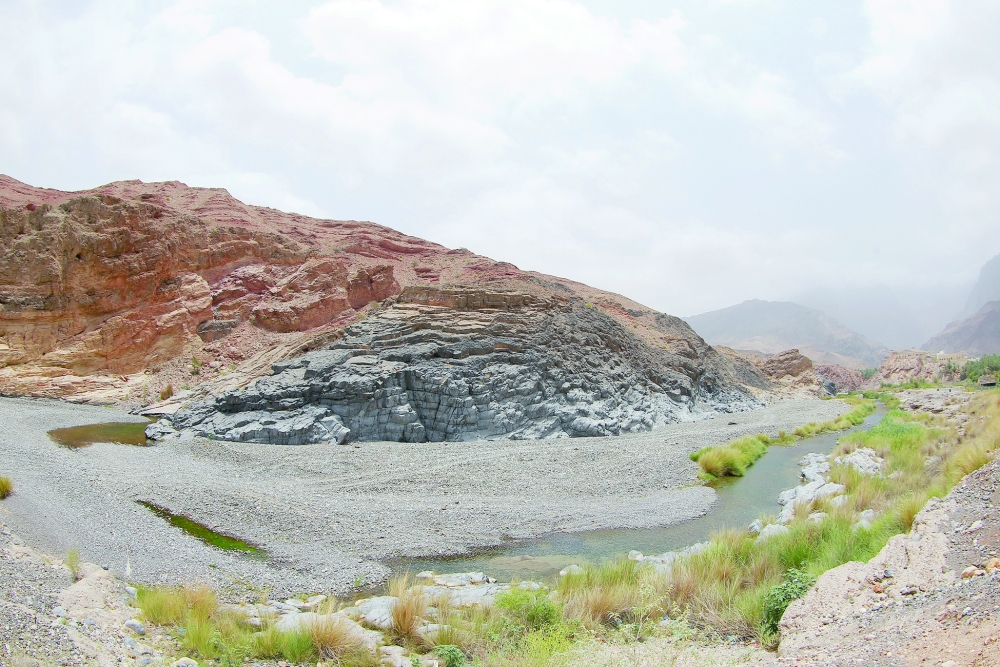
Within the Wahrah Formation, the researchers identified sedimentary manganese accumulations associated with hydrothermal activity in two geological settings: the Hamra Ad Duru' sub-basin, linked to the Samail Ophiolite, and the Al Batain Basin, associated with the Masirah Ophiolite.
The deposits occur in layered formations within red, black and grey radiolarian chert, alongside mudstone.
The findings highlight the complex geological processes involved in manganese formation in Oman, particularly the interaction between hydrothermal activity, marine sedimentation and subsequent changes to the rocks.
The researchers recommend more extensive geological surveys, advanced mapping techniques and detailed structural analysis to establish the scale and distribution of the deposits.
Further investment in manganese research could help assess the resource's economic potential, support the development of Oman's mining sector and strengthen the country's prospects in the global market for strategic minerals.
Oman Observer is now on the WhatsApp channel. Click here